
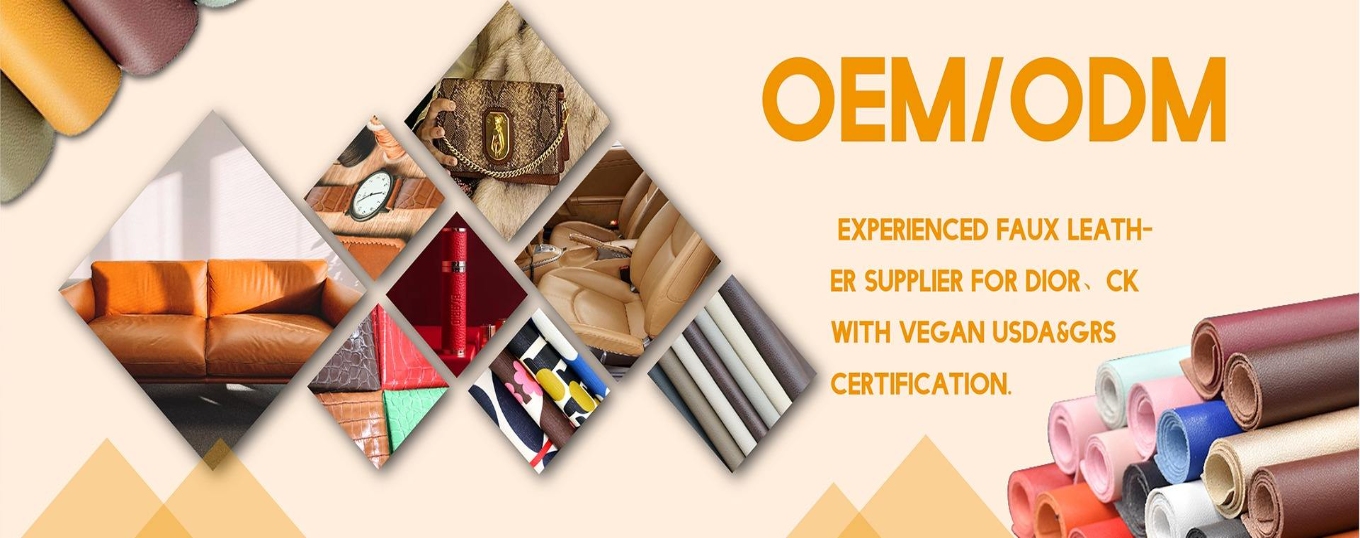
PRODUCTS
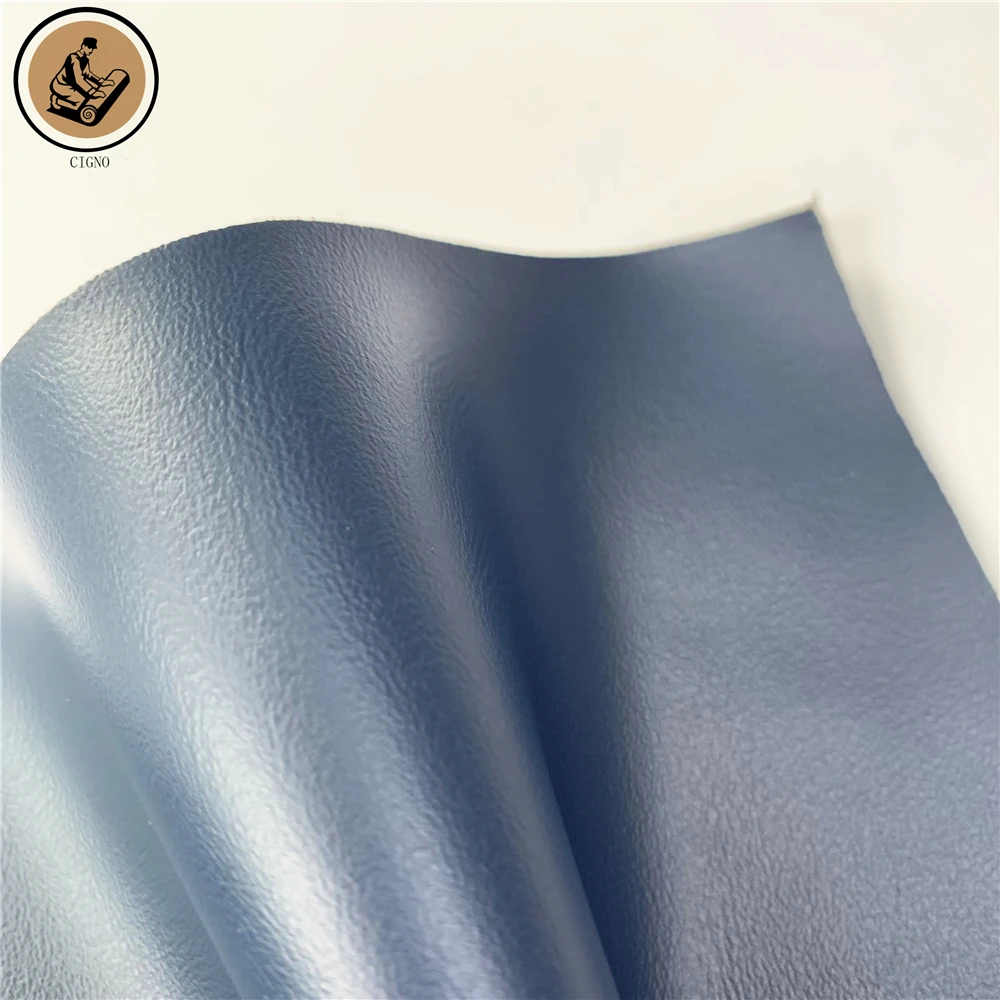
High Quality Eco-Friendly 1.2mm PU Synthetic Leather Furniture Upholstery Solvent-Free Skin-Feel for Sofa Car Seat Chair Bag Use
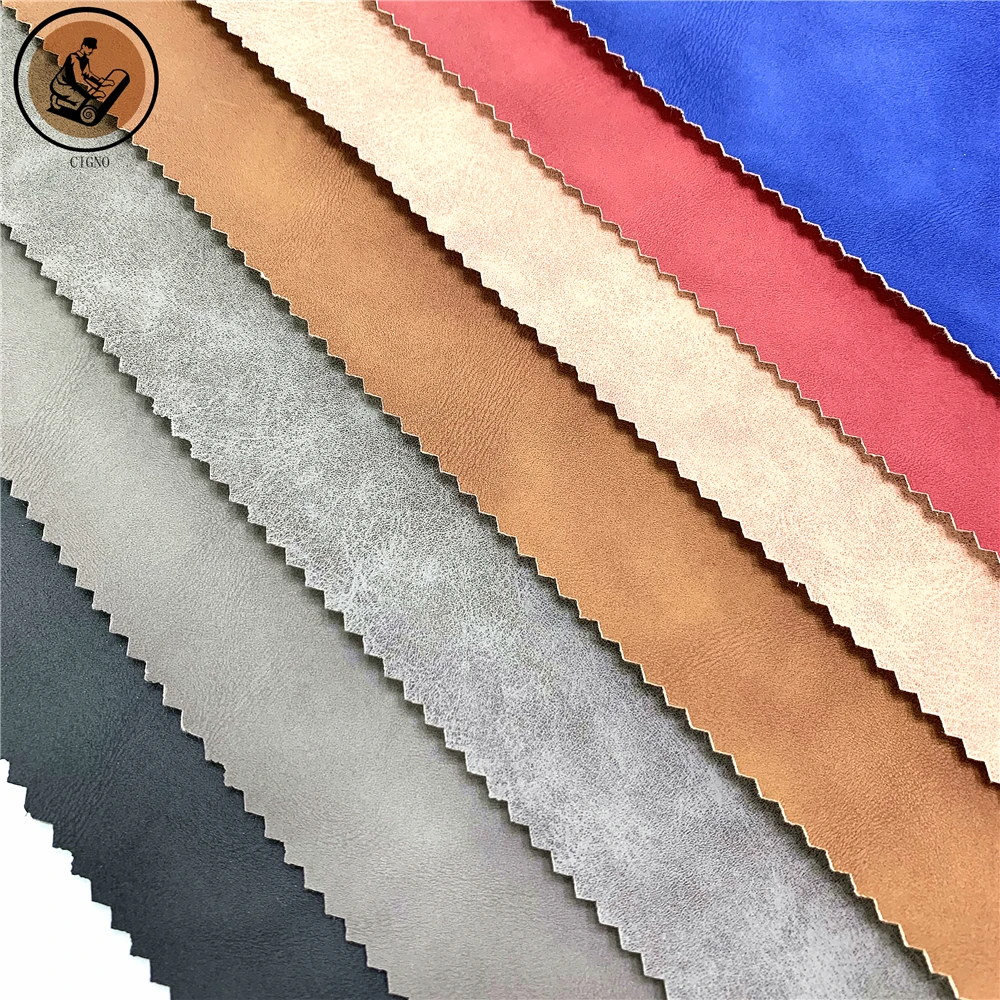
Free Samples of Embossed PU Synthetic Leather Bags Shoes Sofa Furniture Garments Car Decorative Uses-Waterproof Stretch Features
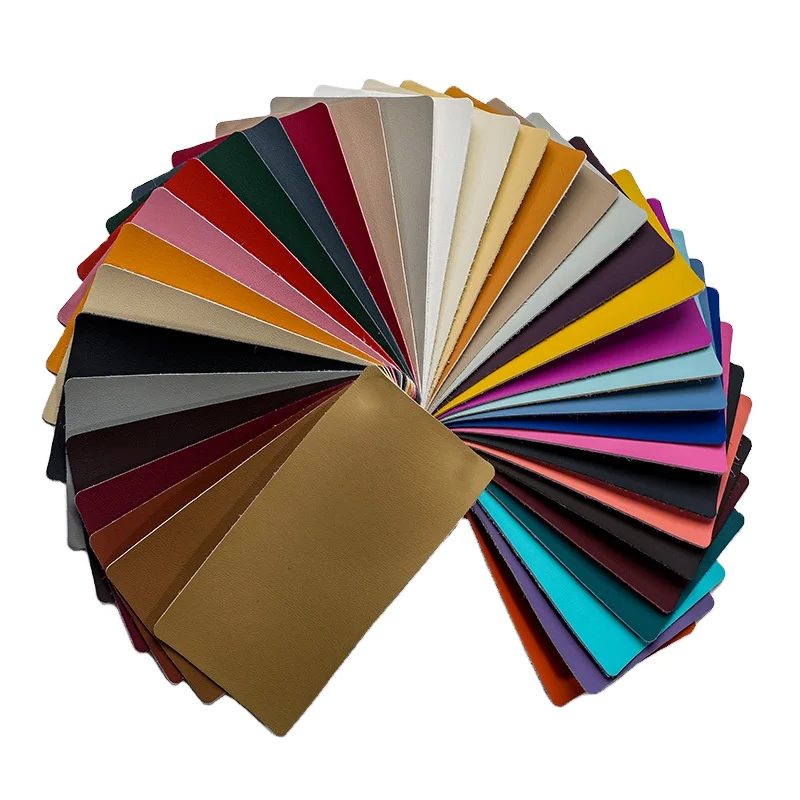
Pvc Vinyl Leather Rexine Leather Faux for Cars/Motorcycles, Waterproof Embossed Recycling Leatherette for Automotive Leather
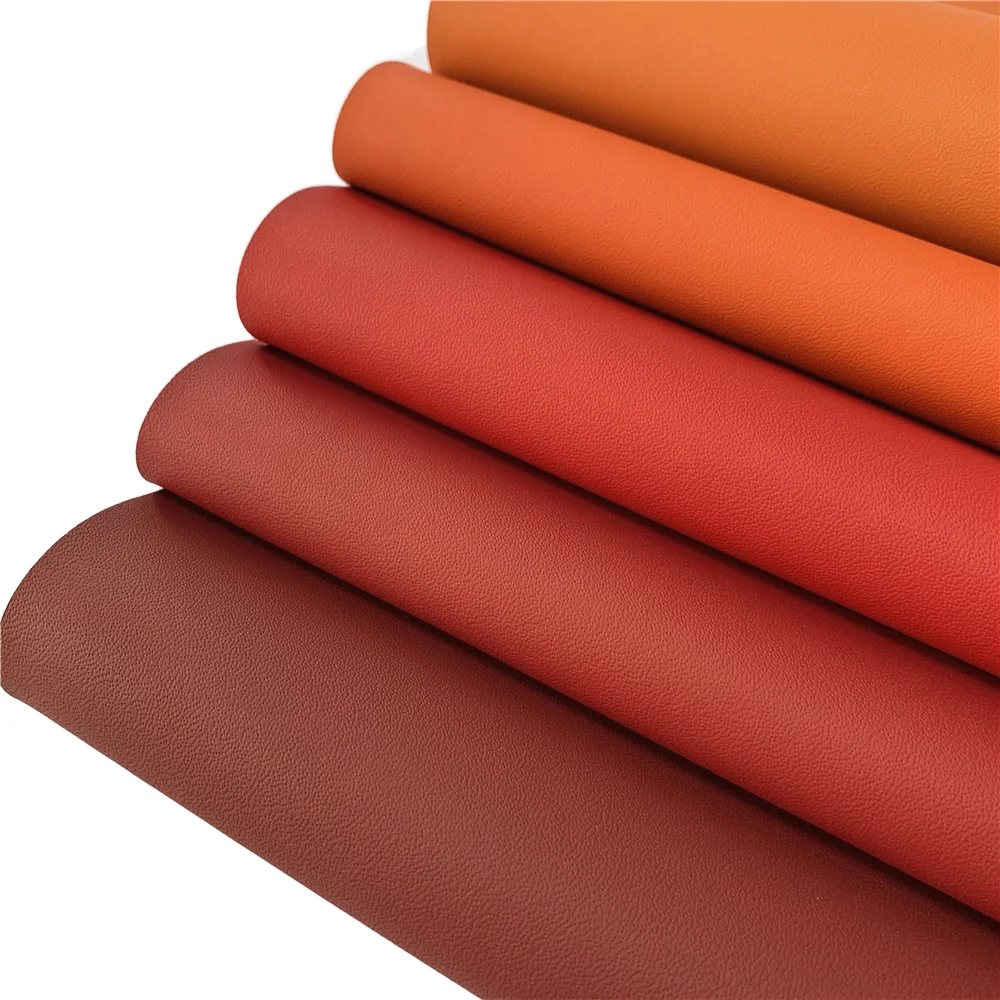
Hydrolysis Resistant Waterproof PU Microfiber Suede Leather Fabric Furniture Car Seat Covers Automotive Upholstery Bags Sofas
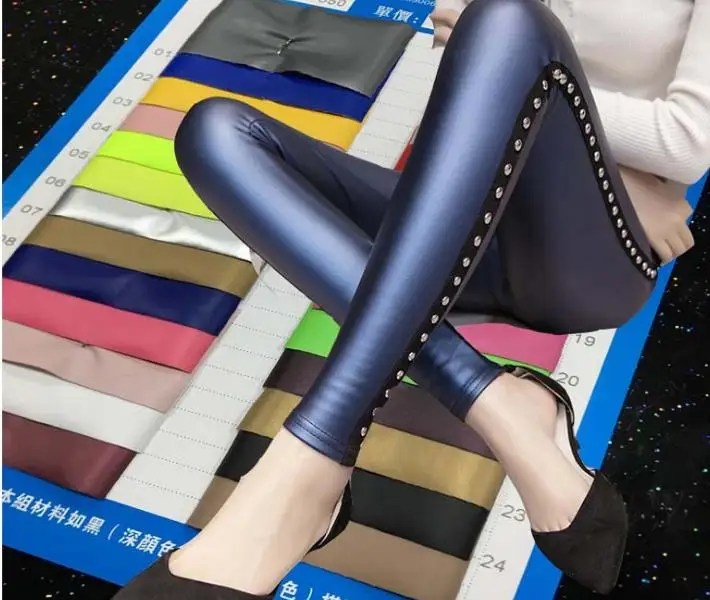
Ultra-Bright Black Mirror Four-Sided Stretch PU Fabric Pants Dresses Solid Color Soft Waterproof Clothing Elastic Finished
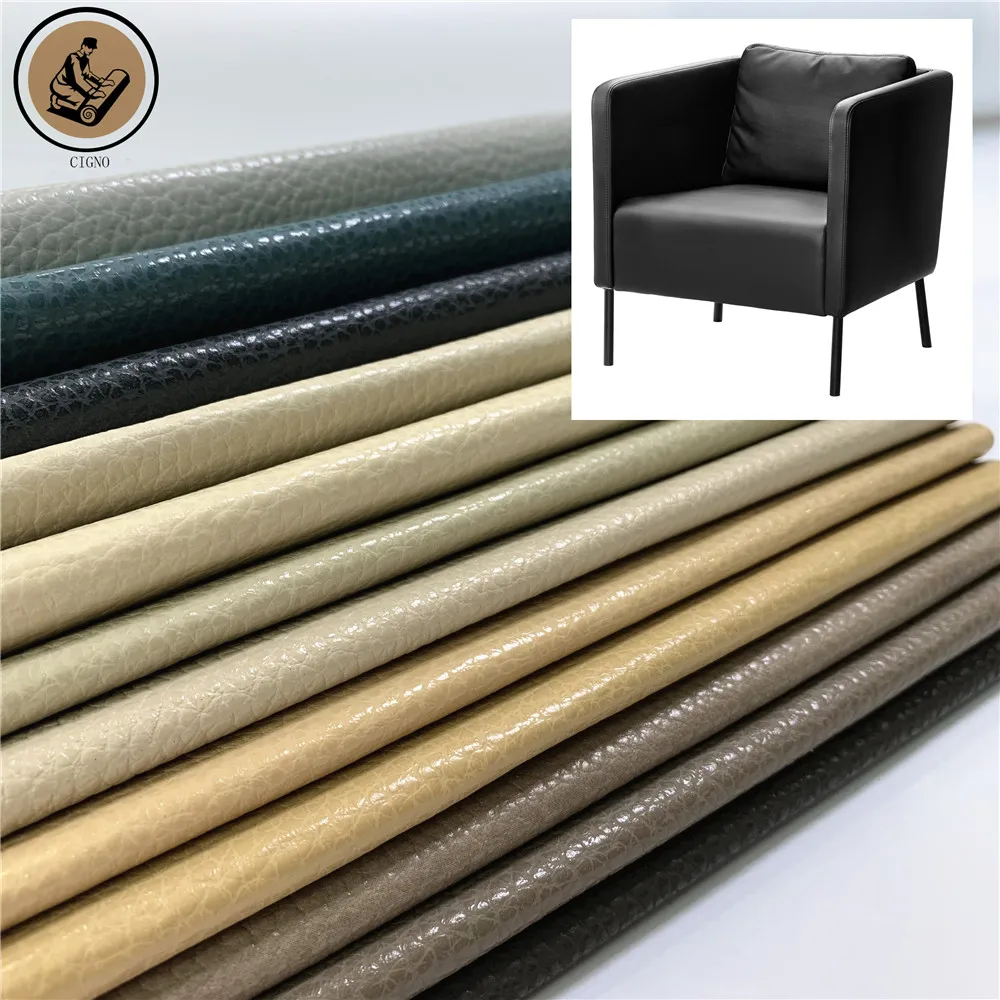
Litchi Lychee Grain 1.2mm PU Microfiber Leather Eco-Friendly Synthetic Leather Sofa Car Seat Handbags-Pearly-Lustre Recycled
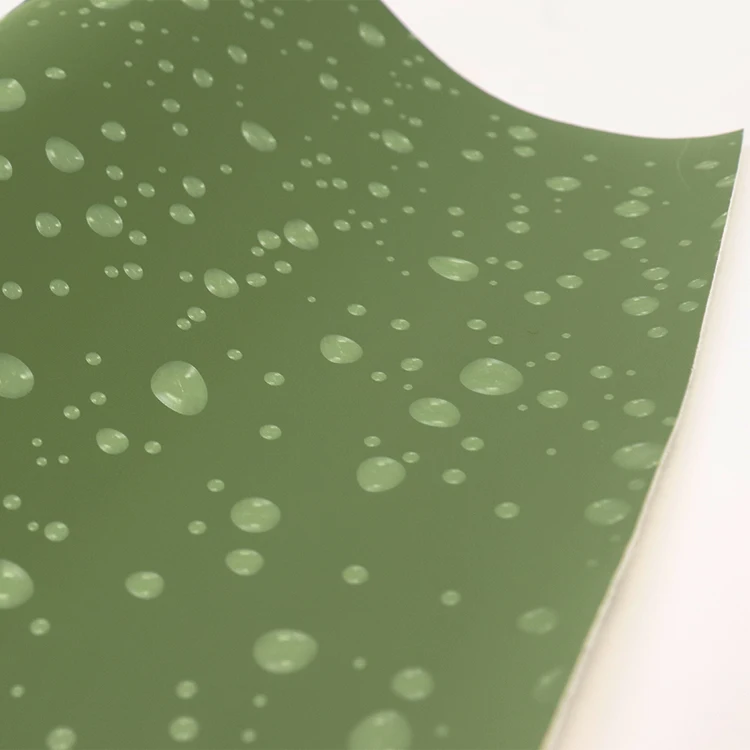
Custom Designer Faux Leather Fabric PVC Synthetic Leather Waterproof Sofa Bag Furniture Chair Woven Backing-Price Per Meter
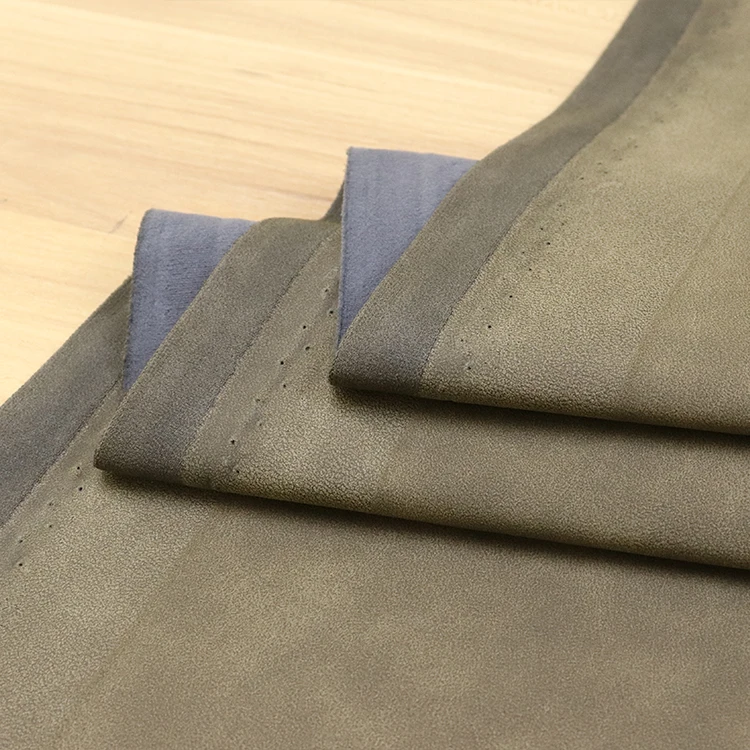
PU Suede Leather Nubuck Artificial Leather Materi for Shoe Make
How do I reduce the risk of a microfiber leather for car sample differing from bulk goods?
To reduce the risk of an automotive microfiber leather sample differing from bulk goods, establish clear technical specifications—including thickness, backing material, grain texture, and surface finish—before production. Implement strict ISO 9001 quality control covering raw material inspection, color matching confirmation, laboratory performance testing, and pre-shipment inspection. Standardizing batch parameters and securing golden samples minimizes batch-to-batch variance.
Core Solutions & Key Takeaways
- Lock physical specifications early, including thickness tolerances (0.7–1.2 mm), backing type (knitted, woven, non-woven), surface sheen, and backing adhesion.
- Enforce structured ISO 9001 quality control across raw material verification, batch color matching, and full finished-goods testing.
- Retain validated golden samples and mandate pre-shipment lab testing for abrasion resistance, tensile strength, flame retardancy, and low-odor performance.
- Partner with established OEM/ODM manufacturers offering flexible pilot runs (minimum order quantities starting at 100 meters) prior to full-scale orders.
Detailed Architectural & Manufacturing Analysis
Discrepancies between initial samples and mass-produced automotive synthetic leather frequently stem from variations in substrate backing, dye lot shifts, or inconsistent curing temperatures during high-volume coating runs. Eliminating these risks requires rigorous process control at every production stage. Working with an experienced manufacturer like Dongguan Cigno Leather Co., Ltd. ensures that technical specifications established during sample sign-off are directly mapped to automated production lines equipped for large-scale output.
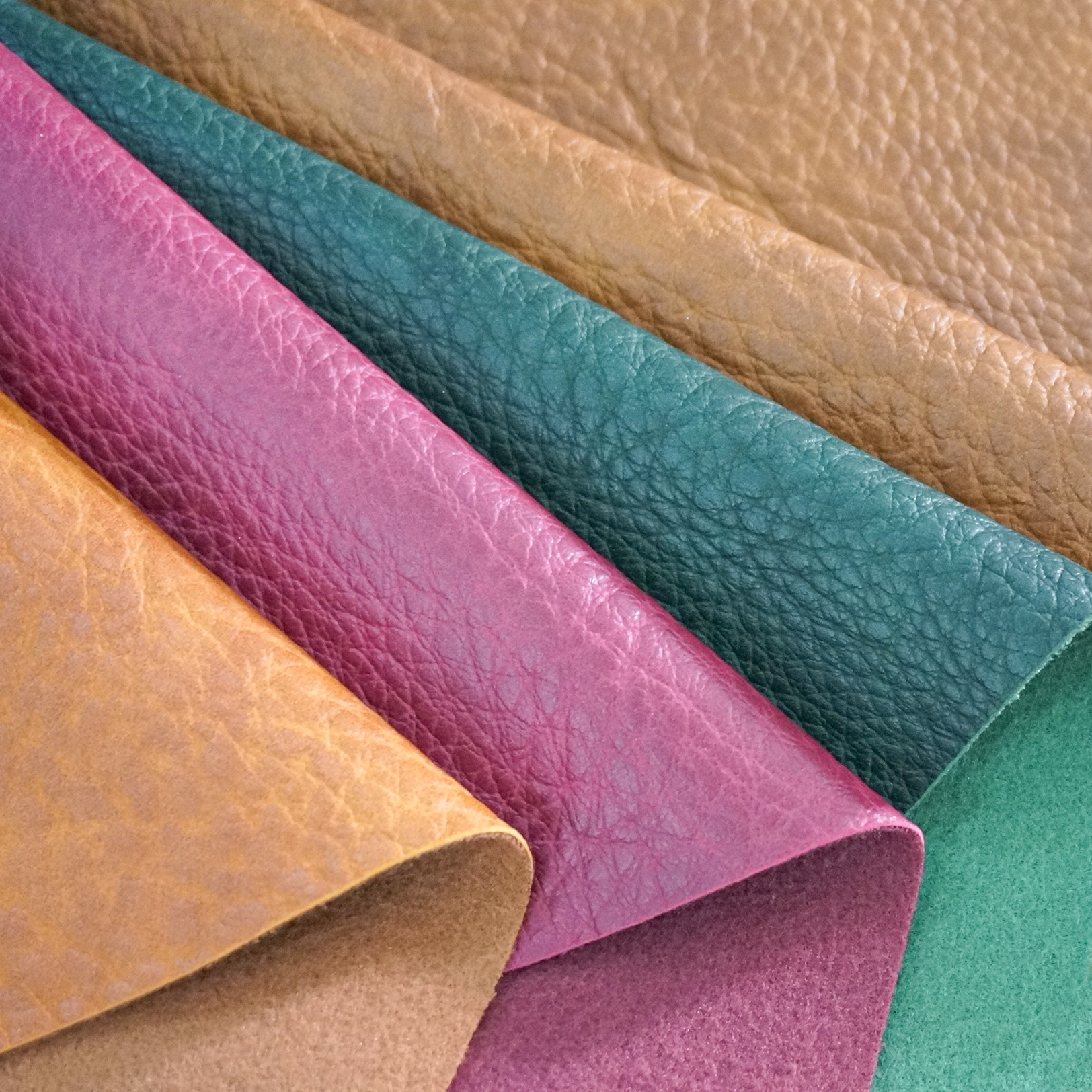
In practical applications, such as a project involving 50,000 meters of customized automotive seat material exported to Mexico, strict adherence to color matching, grain reproduction, and backing consistency was achieved through step-by-step quality checkpoints. Raw materials undergo incoming inspection, followed by inline color verification and post-production laboratory evaluation for tensile strength, peeling strength, UV resistance, and flame retardancy.
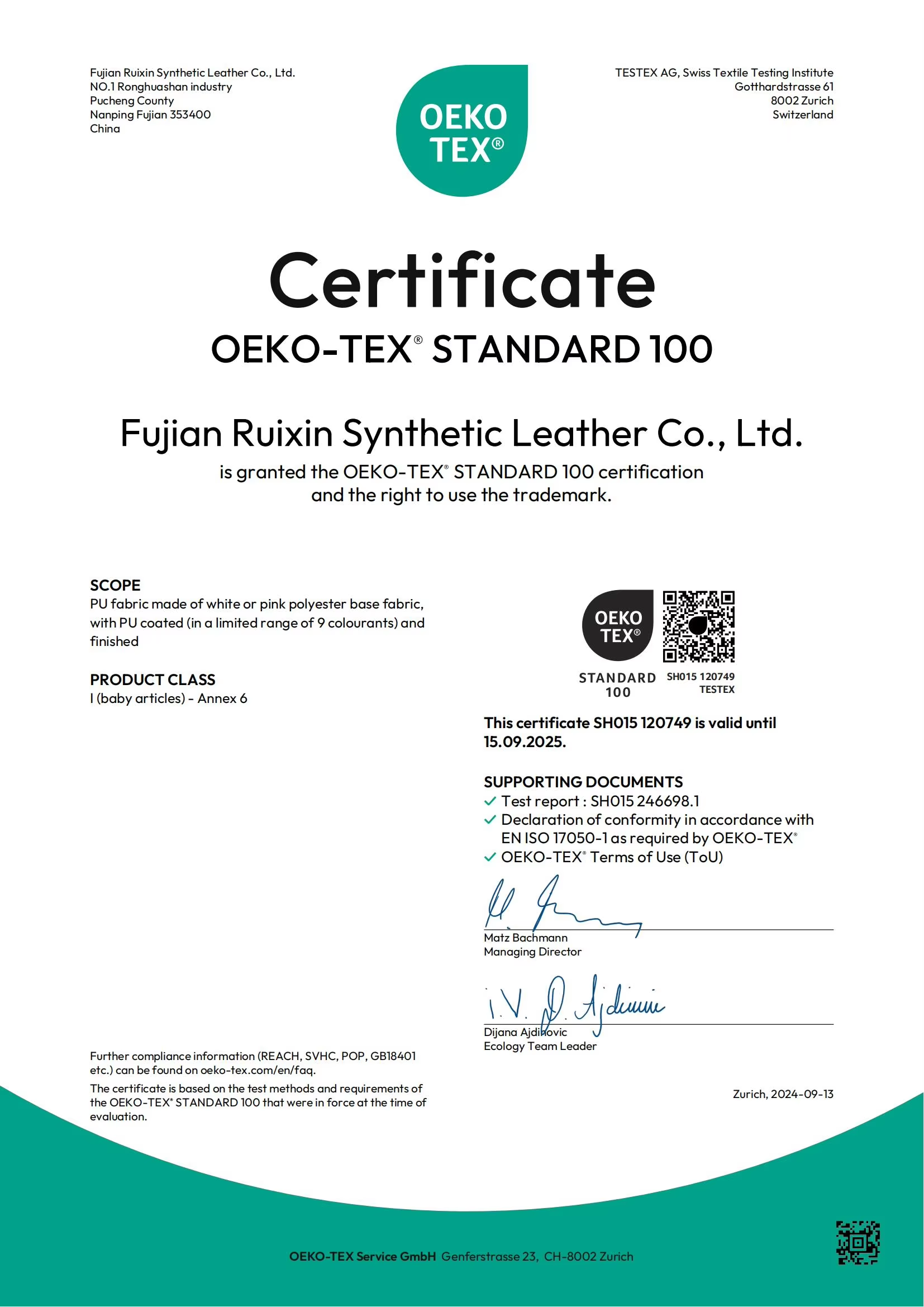
International certifications provide verified benchmarks for material consistency and safety compliance. Holding recognized credentials such as GRS, USDA, and Oeko-Tex 100 guarantees that chemical formulations, flame retardants, and backing fabrics remain standardized between custom prototype development and high-volume roll manufacturing.
Data & Quality Control Comparison
| Inspection Parameter | Sample Phase Standard | Bulk Production Control Protocol | Risk Reduction Mechanism |
|---|---|---|---|
| Thickness & Width | 0.7–1.2 mm (customizable), 54/55 inches | Continuous inline gauge monitoring across 6 production lines | Prevents dimensional variation and backing density shifts |
| Grain & Texture | Nappa, lychee, or custom embossed pattern | Master-plate calibration & visual grain-depth audit | Eliminates tactile and visual mismatch across production rolls |
| Physical Durability | Lab testing for abrasion, scratch & UV resistance | ISO 9001 lot-by-lot mechanical and flame-retardant testing | Guarantees long-term wear performance in automotive cabins |
| Environmental & Odor | REACH, RoHS, fluorine-free lab validation | Batch chemical verification & low-VOC curing controls | Prevents volatile organic compound off-gassing in finished interiors |
Frequently Asked Questions (FAQ)
What key technical details should be specified before ordering a sample?
Define exact thickness targets (0.7–1.2 mm), width (54/55 inches), backing type (knitted, woven, or non-woven), surface finish (matte or semi-gloss), grain style (Nappa, lychee, or custom), and required functional treatments such as flame retardancy or anti-mold properties.
How do golden samples help prevent batch-to-batch variations?
A golden sample serves as the binding physical reference standard signed by both buyer and manufacturer. Production line operators use it to compare color hue, grain depth, hand feel, and backing structure during inline inspections.
What payment and shipping terms support quality verification for bulk orders?
Standard commercial agreements utilize a 30% deposit to initiate production with the remaining 70% balance due after quality inspection approval prior to shipment. Supported logistics options include Sea Freight, Air Freight, and Express Delivery under terms like EXW, FOB, CFR, CIF, and DDP via T/T bank transfer, L/C, or Trade Assurance.
Final Conclusion & Recommendations
Aligning sample standards with bulk production requires formal quality control protocols, precise color matching, and transparent supply chain practices. Relying on certified production facilities operating under ISO 9001 systems guarantees predictable batch-to-batch consistency for automotive seats, door panels, and headrests. For detailed technical solutions or support, please reach out to us via vicky@bozeleather.com.
About Us
Dongguan Cigno Leather Co., Ltd. was established in 2007 and operates a 100,000 sqm manufacturing infrastructure dedicated to advanced synthetic and eco-friendly materials. Armed with over 30 national invention patents and extensive R&D capabilities, the company delivers customized OEM/ODM solutions to automotive and upholstery clients across North America, Europe, and Southeast Asia. Certified under GRS, USDA, and Oeko-Tex 100, it provides consistent high-volume material manufacturing for global markets.

SUBSCRIBE
INQUIRY