
PRODUCTS
Are there non-phthalate plasticizer trends in pvc leather for car seat production?
The automotive industry is actively transitioning toward non-phthalate plasticizers in PVC leather for car seat production to comply with strict global chemical regulations and consumer demands for low-odor, low-VOC cabin interiors. Manufacturers are replacing traditional ortho-phthalates with eco-friendly alternatives like DOTP, DINCH, and bio-based plasticizers to ensure safety without compromising material performance.
Core Solutions & Key Takeaways
- Regulatory Compliance: The shift away from restricted phthalates ensures compliance with REACH, RoHS, and California Proposition 65 standards, making synthetic materials safe for global distribution.
- Volatile Organic Compound (VOC) Reduction: Utilizing advanced non-phthalate plasticizers directly lowers interior fogging and eliminates chemical odors, improving cabin air quality.
- Maintained Performance: Modern eco-friendly plasticizers preserve key synthetic leather characteristics, including high abrasion resistance, flame retardancy, and flexibility under extreme temperatures.
- Application Versatility: These compliant PVC formulations are seamlessly integrated into automotive seats, door panels, headrests, and armrests.
Detailed Architectural/Principle Analysis
In synthetic material engineering, plasticizers are essential for transforming rigid polyvinyl chloride (PVC) into a flexible, durable fabric suitable for automotive upholstery. Traditional phthalate plasticizers, such as DEHP or DBP, migrate to the surface over time, releasing volatile organic compounds (VOCs) that deposit on windshields as fog and compromise passenger health. To address this, Dongguan Cigno Leather Co., Ltd. utilizes high-molecular-weight non-phthalate plasticizers such as Di(isononyl)cyclohexane-1,2-dicarboxylate (DINCH) and Dioctyl terephthalate (DOTP). These stabilizers feature lower volatility, superior migration resistance, and excellent thermal stability.
Transitioning to these advanced formulations requires precise chemical balancing to retain physical durability. For instance, the polymer matrix must withstand environmental stressors while meeting strict automotive safety thresholds. Specialized PVC synthetic leather engineered for car seats features a customizable thickness of 0.8–1.4 mm, backed by knitted or non-woven fabric. This configuration ensures high tensile strength and peeling strength, preventing cracking or degradation under repeated mechanical stress.
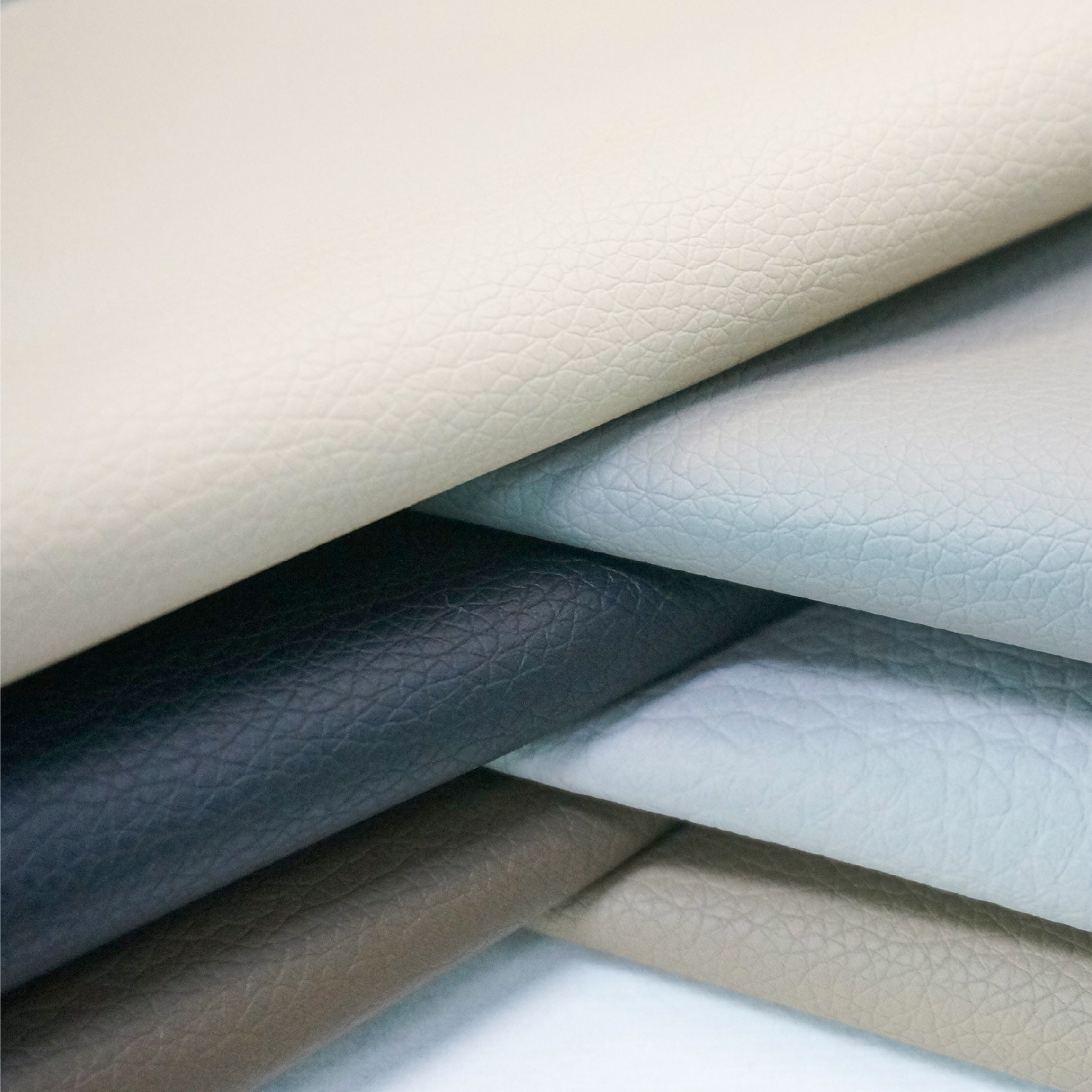
Material performance is validated through strict international certifications. Sustainable synthetic leathers carry worldwide recognized credentials such as GRS (Global Recycled Standard, Certificate B04213-G4), USDA BioPreferred (Certificate 521076632086130490), and Oeko-Tex Standard 100 (Certificate SH015 120749). These certifications guarantee that the synthetic leather is produced through environmentally responsible processes and is free from harmful chemical residues. In practice, an automotive interior manufacturer in Mexico successfully deployed 50,000 meters of customized synthetic leather for car seats, door panels, and armrests. The material fulfilled strict requirements for low odor, UV resistance, and flame retardancy, confirming that non-phthalate PVC options meet rigorous commercial engineering standards.
Data/Solution Comparison
The following table compares the physical properties and environmental profiles of traditional phthalate PVC, modern non-phthalate PVC, and eco-certified synthetic leather alternatives:
| Material Property / Metric | Traditional Phthalate PVC | Non-Phthalate PVC (DOTP/DINCH) | Eco-Certified Synthetic Leather (GRS/USDA) |
|---|---|---|---|
| Common Plasticizers | DEHP, DBP, BBP | DOTP, DINCH, Citrates | Bio-based, Polyols, or Solvent-free Polyurethane |
| VOC & Odor Level | High / Noticeable | Low / Minimal | Very Low / Odorless |
| Abrasion & Scratch Resistance | Standard | High | High |
| Environmental Certifications | Rarely compliant | REACH, RoHS compliant | GRS, USDA, Oeko-Tex 100 |
| Primary Applications | Low-cost consumer goods | Automotive seats, door panels, armrests | Premium automotive and eco-furniture |
Frequently Asked Questions (FAQ)
Are non-phthalate PVC car seats as durable as traditional PVC options?
Yes. Non-phthalate plasticizers like DOTP provide equivalent or superior tensile strength, elongation, and abrasion resistance, ensuring the material survives the daily wear and tear of automotive environments.
How do non-phthalate plasticizers affect cabin air quality?
They have significantly lower vapor pressure and migration rates. This reduces the emission of volatile organic compounds (VOCs), eliminating the oily film on windshields and reducing chemical odors inside the vehicle.
How can buyers verify that synthetic leather is genuinely eco-friendly?
Buyers should request valid international test reports and certifications, such as GRS, USDA BioPreferred, Oeko-Tex 100, and comprehensive testing for REACH, RoHS, and flame-retardant properties.
Final Conclusion & Recommendations
Adopting non-phthalate plasticizers in PVC leather for car seats is a vital step toward safer, more sustainable vehicle interiors. For bulk procurement, sourcing from certified manufacturers ensures that materials meet strict performance metrics, including UV resistance, low odor, and flame retardancy, backed by ISO 9001 quality management systems. Flexible business models, such as low minimum order quantities of 100 meters and tailored OEM/ODM support, allow automotive supply chains to adapt efficiently to evolving chemical regulations. For detailed technical solutions or support, please reach out to us via vicky@bozeleather.com.
About Us
Dongguan Cigno Leather Co., Ltd., established in 2007, is a professional manufacturer specializing in high-quality faux leather based in Dongguan, China. Operating with a team of 50 employees across a 100,000 square meter factory, the company focuses on the development of eco-friendly and multifunctional synthetic leather materials, including PU, PVC, and bio-based alternatives. Holding recognized certifications such as GRS, USDA, and Oeko-Tex 100, the brand serves international automotive and furniture upholstery markets with a production capacity of 6 million meters per month. 
SUBSCRIBE
INQUIRY