
PRODUCTS
How do you ensure the pvc leather for car seat sample represents bulk quality?
Ensuring that a pvc leather for car seat sample represents bulk production quality requires a systematic quality control workflow. Manufacturers align the sample and bulk runs by using identical raw materials, consistent calendar or coating line settings, and conducting standardized laboratory performance testing to verify thickness, grain depth, and backing fabric adhesion.
Core Solutions & Key Takeaways
- Standardized Raw Materials: Using the exact same PVC resins, plasticizers, and stabilizers for both development samples and bulk production prevents variations in hand feel, odor, and physical performance.
- Strict In-Process Quality Control: Matching the line speed, temperature, and embossing roll pressure of the production machinery to the initial sample specifications ensures consistent texture replication.
- Comprehensive Laboratory Testing: Samples undergo rigorous verification for abrasion resistance, tensile strength, and flame retardancy, establishing a physical benchmark that bulk batches must match during pre-shipment inspections. This level of quality management is critical for high-performance automotive and furniture upholstery.
Detailed Architectural/Principle Analysis
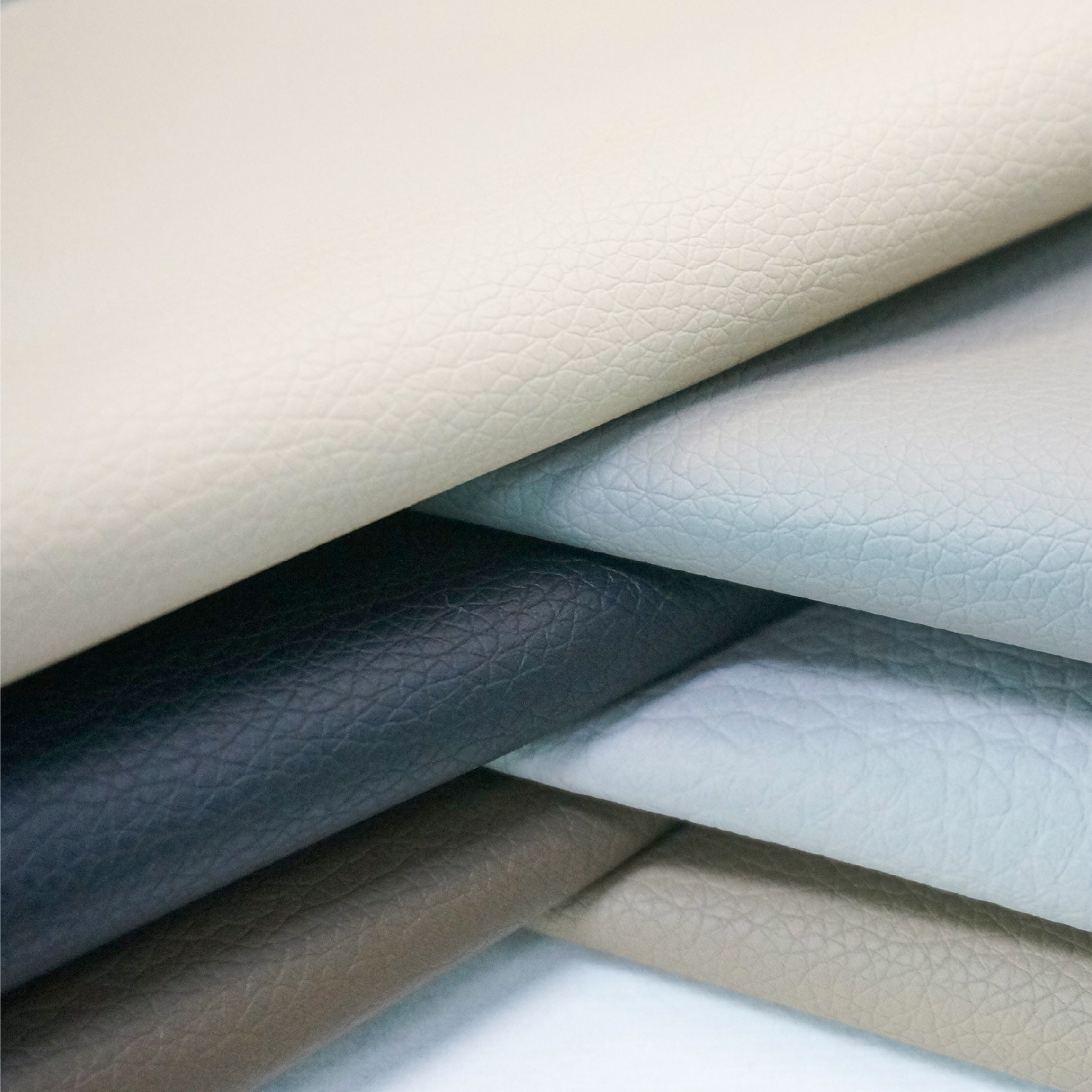
To guarantee that the pvc leather for car seat sample transitions seamlessly to bulk production without degradation in performance, manufacturers implement a multi-stage quality gate system. The process begins with raw material inspection, where the PVC synthetic leather formulation is locked in. Any customization in thickness (typically ranging from 0.8 to 1.4 mm), backing fabric (such as knitted or non-woven fabric), or surface finish (matte or semi-gloss) is documented in a technical specification sheet that serves as the manufacturing blueprint.
During the sample phase, pilot runs establish the base parameters. When transitioning to bulk manufacturing, the production team uses these identical parameters on advanced synthetic leather production lines. Dongguan Cigno Leather Co., Ltd. enforces this consistency by operating under the ISO 9001 quality management system, conducting color and grain confirmation alongside in-process quality control to prevent deviation. International certifications such as GRS (Global Recycled Standard), USDA BioPreferred, and Oeko-Tex Standard 100 validate that the base material chemistry remains stable and compliant across all production volumes.
Real-world application confirms the effectiveness of these strict manufacturing controls. For instance, in a supply case involving an Automotive Interior Manufacturer in Mexico, 50,000 meters of customized synthetic leather were delivered for automotive seats, door panels, headrests, and armrests. By matching the sample's specifications for low odor, UV resistance, flame retardancy, and abrasion resistance, the bulk shipment maintained perfect color consistency and grain texture, earning approval for meeting strict automotive interior guidelines.
Data/Solution Comparison
The following table outlines the technical parameters checked during both the sampling and bulk production phases to ensure total consistency:
| Quality Parameter | Sample Specification | Bulk Production Tolerance | Testing/Verification Method |
|---|---|---|---|
| Thickness Range | 0.8–1.4 mm (Customized) | ±0.05 mm | Dial thickness gauge testing |
| Width | 54/55 inches | -0 / +0.5 inches | Standard tape measurement |
| Color & Grain Consistency | Approved master standard | Delta E < 1.0 (Spectrophotometer) | D65/TL84 light box visual & instrumental check |
| Flame Retardancy | Compliant with target standard | 100% Pass (No deviation) | Laboratory burn chamber testing |
| Backing Fabric Adhesion | Knitted / Non-woven standard | Minimum peeling strength met | Tensile testing machine peel test |
Frequently Asked Questions (FAQ)
Q1: How do you prevent color variance between the approved PVC leather sample and the bulk order?
A1: Color consistency is maintained by using computerized color matching systems and maintaining strict control over pigment ratios. Each bulk batch is checked against the physical sample under standardized light sources (D65, TL84) and measured with a spectrophotometer to ensure the color deviation remains within acceptable automotive tolerances.
Q2: Can the physical properties like scratch resistance and low odor be guaranteed in mass production?
A2: Yes. The specialized additives responsible for scratch resistance, UV stability, low odor, and flame retardancy are mixed into the PVC formulation at precise weight ratios. Raw material inspection and laboratory performance testing are executed for every production run to verify these functional properties match the sample.
Q3: What happens if the bulk material does not match the approved sample?
A3: A robust quality system includes pre-shipment inspections and laboratory testing of the finished batch before it leaves the factory. If any parameter fails to match the approved sample, the manufacturer's after-sales support protocol is triggered to provide corrective actions, replacements, or technical adjustments prior to dispatch.
Final Conclusion & Recommendations
Securing a representative sample of PVC leather for automotive seating requires partnering with a manufacturer that utilizes standardized quality control systems, from raw material grading to final packaging. Buyers should request comprehensive test reports covering abrasion, tensile strength, and emissions before approving samples. Operating under verified international guidelines ensures that bulk shipments perform reliably during upholstery fabrication. For detailed technical solutions or support, please reach out to us via vicky@bozeleather.com.
About Us
Established in 2007, Dongguan Cigno Leather Co., Ltd. is a professional manufacturer specializing in high-quality faux leather based in Dongguan, China. Operating with a 100,000 square meter factory area and professional R&D capabilities, we focus on the development of eco-friendly and multifunctional synthetic leather materials. Our products hold internationally recognized credentials, including GRS, USDA, and Oeko-Tex 100 certifications, serving major global brands across the furniture, automotive, and footwear industries.

SUBSCRIBE
INQUIRY