
PRODUCTS
How well does the pvc leather for car seat resist color fading from sun?
PVC leather for car seats resists color fading from the sun through built-in UV resistance, low-odor additives, and engineered surface stabilization. Premium formulations prevent chemical breakdown from ultraviolet radiation, ensuring the material retains its original color, grain depth, and physical integrity during prolonged exposure to sunlight and high interior temperatures.
Core Solutions & Key Takeaways
- Integrated UV Stabilizers: The chemical formulation includes specialized ultraviolet light absorbers that neutralize harmful radiation before it degrades the PVC polymer chain.
- Thermal Degradation Resistance: Engineered to withstand the extreme heat buildup common in automotive cabins, preventing heat-induced discoloration and surface cracking.
- Multi-Scenario Performance: Tailored for demanding environments like automotive seats, door panels, headrests, and armrests where sun exposure is direct and continuous.
- Verified Quality Control: Sun fading resistance is validated through laboratory performance testing, including rigorous color consistency and UV exposure trials.
Detailed Architectural/Principle Analysis
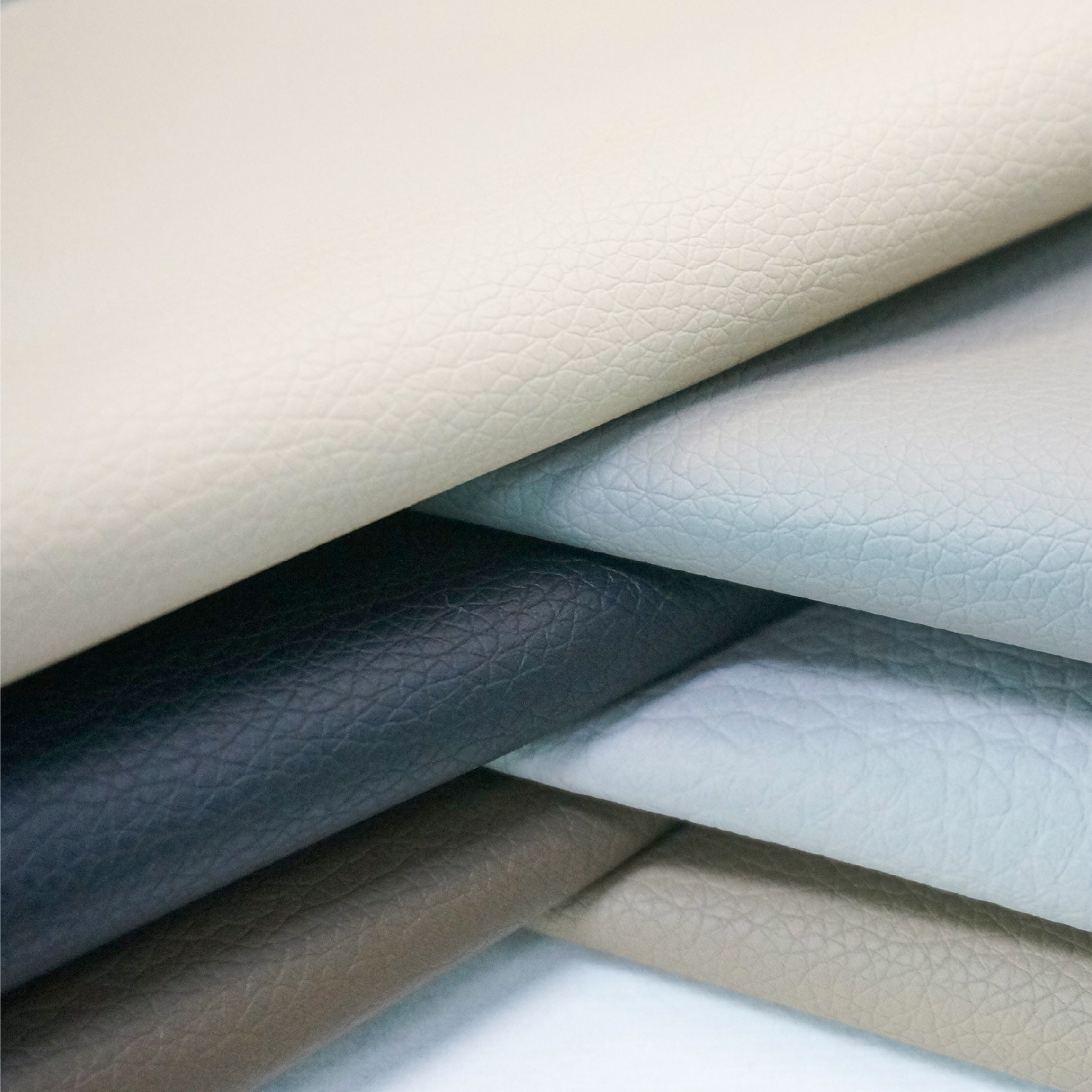
Color fading in synthetic leather occurs when ultraviolet (UV) light penetrates the surface polymer, breaking down molecular bonds and degrading pigments. To counteract this, Dongguan Cigno Leather Co., Ltd. utilizes advanced formulation chemistry. By incorporating UV-blocking agents and light stabilizers directly into the PVC compound, the material reflects and absorbs damaging radiation, safeguarding both the pigment and the backing fabric.
The material undergoes comprehensive laboratory performance testing under simulated sunlight conditions. These tests measure color consistency, tensile strength, peeling strength, and odor performance after accelerated UV weathering. Certified production standards, backed by global credentials such as USDA, GRS, and Oeko-Tex 100, ensure the synthetic leather maintains its physical properties without emitting volatile organic compounds (VOCs) when heated by the sun.
This advanced engineering is proven in demanding global markets. For instance, in a supply case in Mexico, 50,000 meters of customized synthetic leather were delivered for automotive seats, door panels, headrests, and armrests. The material successfully met stringent requirements for UV resistance, abrasion resistance, low odor, and stable color consistency under high-solar-exposure conditions, demonstrating reliable long-term performance.
Data/Solution Comparison
| Performance Metric | Standard PVC Automotive Leather | High-Performance UV-Stabilized PVC Leather |
|---|---|---|
| UV Resistance Level | Standard / Basic | High (Tested for accelerated weathering) |
| Color Retention Rate | Moderate fading over 12 months | Excellent (Stable color consistency) |
| Surface Protection | Standard topcoat | Matte or semi-gloss scratch-resistant finish |
| Thickness Range | 0.8–1.4 mm (customizable) | 0.8–1.4 mm (customizable) |
| Certification Compliance | Basic industrial standards | USDA, GRS, Oeko-Tex 100 |
| Backing Options | Knitted or non-woven fabric | Custom high-strength backing options |
Frequently Asked Questions (FAQ)
Does extreme heat accelerate the fading of PVC car seat leather?
Yes, solar heat buildup in closed vehicles can accelerate chemical degradation. However, high-quality automotive PVC leather utilizes thermal stabilizers alongside UV blockers to prevent heat-induced discoloration, cracking, and premature aging.
How is the sun resistance of automotive PVC leather tested?
It is evaluated through laboratory weathering tests where samples are exposed to intense UV lamps and high temperatures. Technicians then measure the color change against standard grayscale ratings and verify that tensile and peeling strengths remain intact.
Are there eco-friendly certifications for UV-resistant PVC seat leather?
Yes, premium automotive synthetic leathers are certified under international standards such as GRS (Global Recycled Standard), USDA BioPreferred, and Oeko-Tex 100, ensuring they are free from harmful substances and produced responsibly.
Final Conclusion & Recommendations
Selecting PVC leather for automotive upholstery requires prioritizing materials formulated specifically for UV and thermal stability. Opting for certified synthetic leather ensures long-term aesthetic appeal and physical durability under intense solar exposure. For detailed technical solutions or support, please reach out to us via vicky@bozeleather.com.
About Us
Established in 2007, Dongguan Cigno Leather Co., Ltd. is a professional manufacturer specializing in high-quality faux leather based in Dongguan, China. Operating with 50 employees and a massive 100,000 sqm factory, we focus on the development of eco-friendly and multifunctional synthetic leather materials, including PU, PVC, and water-based leasher. Holding GRS, USDA, and Oeko-Tex 100 certifications, our factory features 6 advanced production lines with a monthly capacity of 6,000,000 meters to serve international markets.

SUBSCRIBE
INQUIRY